

We may be sounding like a broken record by now, but recent indicators (like the State of Search Q1 2026 report or Google’s record Q1 revenues) show that Google is still, by far, the most relevant source of visibility and traffic for your website. The State of Search report by Datos and SparkToro shows Google has a 93% market share in the US and 95.5% market share in the EU & UK. Commenting on the results, Sparktoro’s Rand Fiskin said, “Once again, we’re seeing all-time highs in Google usage despite the naysayers in your LinkedIn and Twitter feeds”. He goes on to underline the fact that although AI usage is continuing to grow, it is less than 2% of search traffic. AI Mode is used for under 0.2% of Google searches (although it should be noted that AI Overviews are shown for 25% of queries in Google according to this report by Conductor also released in April).
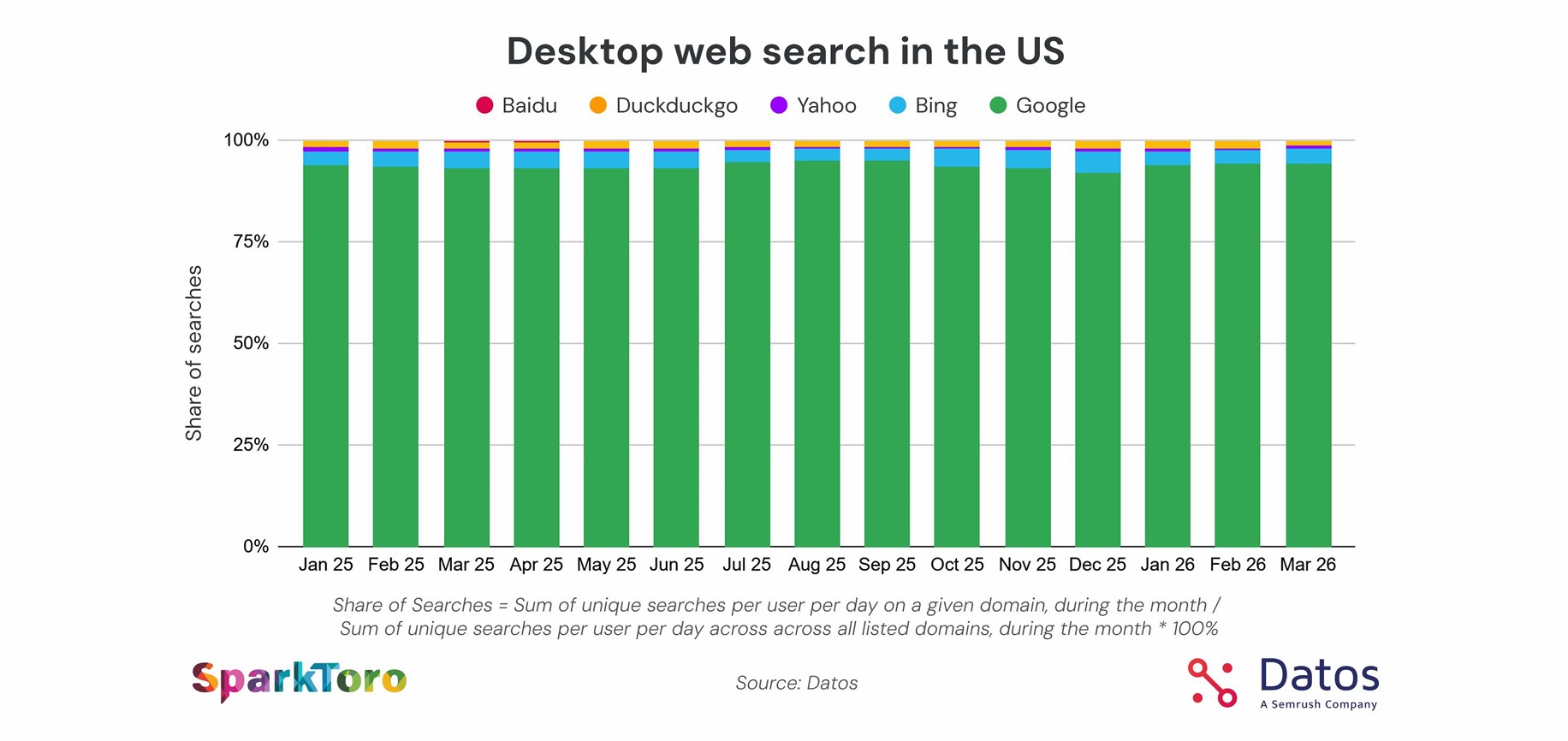
It may be argued that the people using AI and the questions they are asking are more relevant to your business than the searches performed in Google. If visibility in ChatGPT or another AI is important for you, doing SEO, gaining visibility in Google and Bing is a great first step to getting cited by AI.
Google March 2026 Core Update
The March 2026 Core Update released on March 27th finished rolling out on April 8th. Google signaled the end of the update on their Search Status Dashboard and by replying to their original posts on X and LinkedIn. These said nothing more than simply “The rollout was complete as of April 8, 2026.”
Writing for SEO Roundtable, Glenn Gabe said that this update was a “weird one”. He ran reports on thousands of sites during the update and although he saw some movement, there was very little compared to the December 2025 Core Update. He later reported on X that sites that lost visibility during the unconfirmed Google update in January were also hit during the March Spam Update and the March Core Update – as if all updates were targeting the same problem.
Aleyda Solis analyzed shifts in ranking in the US during the update and she concludes that sites losing out were sites “in the middle”, typically aggregators, directories and comparison sites. She identifies sites that lost visibility as “interchangeable intermediary players”. Winners, sites who saw improved ranking, are clearer destinations such as official sources, specialist sites and well-established brands. We suspect there may also be a focus on reducing the ranking of AI-generated content.
Drops in visibility or traffic from Google (as reported by Google Analytics or Google Search Console) over the period from March 27th to April 8th can give you some indication of the impact this update has had on your site. However, the best way to track SEO performance is to track individual keyword ranking over time using a tool like SEOPress Insights.
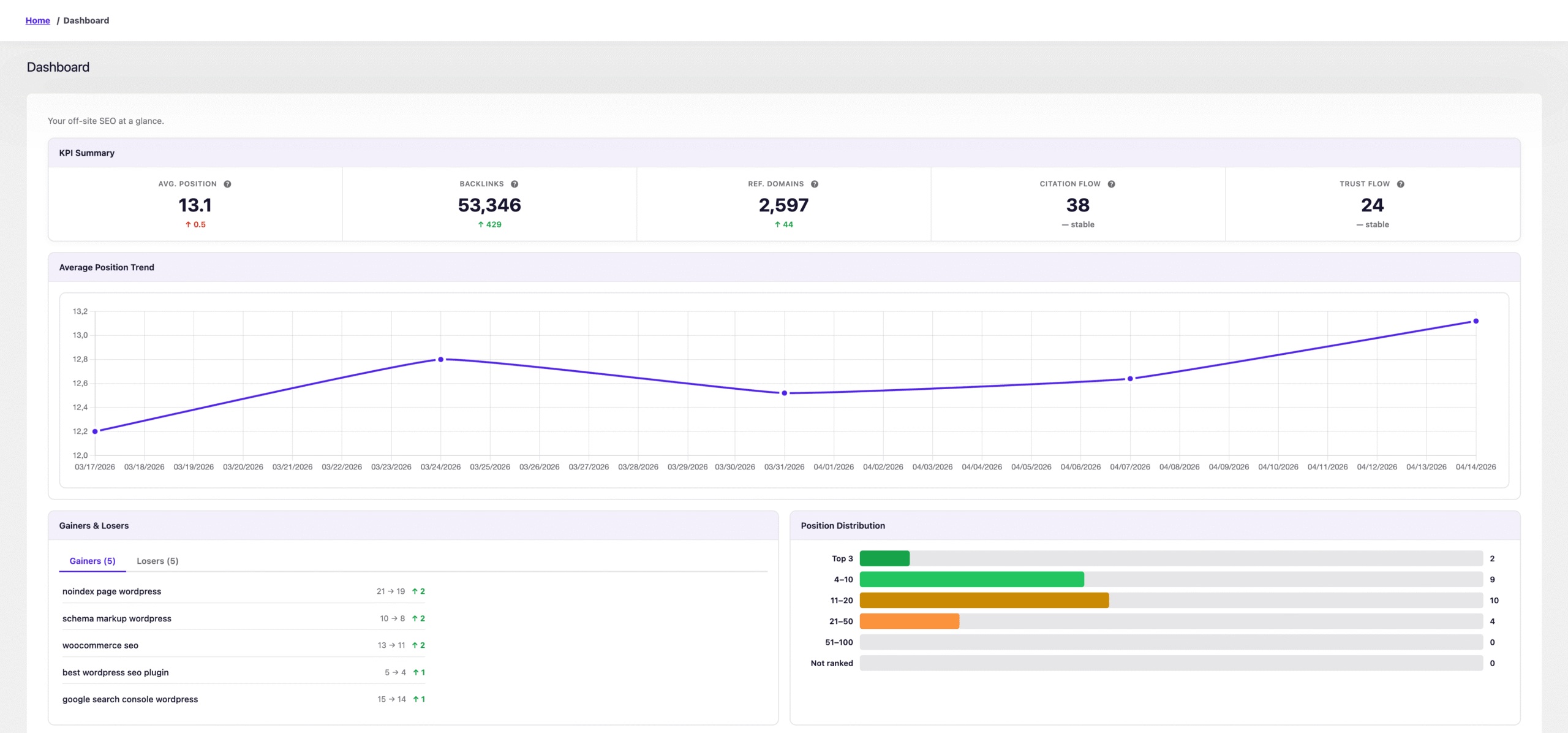
We would also like to remind SEOPress Insights users to update to the latest version, SEOPress Insights v3.0. New features include a new dashboard, custom locations per keyword, and an assistant for finding keywords. We are working on all SEOPress products to improve the user interface, in SEOPress 9.8 you will see a new design for SEO Meta Box, Redirections and Schema editor. Please update your WordPress plugins regularly!
Google Search Central Live Toronto
The Google Search Relations team held their first Search Central Live event in 2026 in Toronto on April 21st. Daniel Waisberg, Danny Sullivan, Martin Splitt, Annanya Raghavan and Ryan Levering were there to give talks on search (and inevitably, AI).
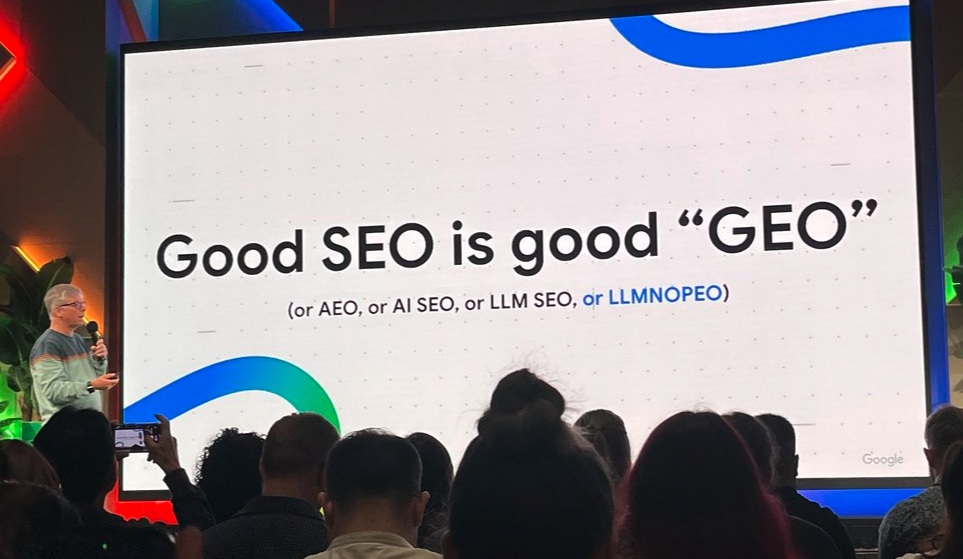
We are indebted to Jean-Christophe Choinard who published his personal notes from the conference with photos of almost all the slides presented. Although he felt that nothing new was shared during the day, he says there were some interesting takeaways from Danny Sulivan that can help convince you (or your boss) about the interest of SEO in a world dominated by AI.
We also thought that his note on the “Quality bar” was also very pertinent. Because AI has lowered the barrier for content creation, Google has been forced to raise its bar for what actually gets indexed (and we think that can also impact how high up a piece of content can rank). Have a look at Danny Sullivans’ definition of Commodity and Non-Commodity content in the slides. In this context, Danny is warning that commodity content (i.e. content that is generic, widely available and could have easily been written by anyone) will not perform well on Google anymore. This echos what Aleyda says about “interchangeable intermediary players” losing out in the March 2026 Core Update.
The other points covered in his notes are the “Crawled – Currently not indexed” issue, scaled content abuse, the Google Trends API, future AI Overviews performance reports, agentic search, the Google-Extended bot, Fan-Out queries, Markdown, LLMS.txt, Rich Result Testing and Schema.
Google Search Console bugs and features
During the Google Search Central Live conference mentioned above, Daniel Waisberg gave a presentation of the useful new features that have been rolling out in Google Search Console this year.
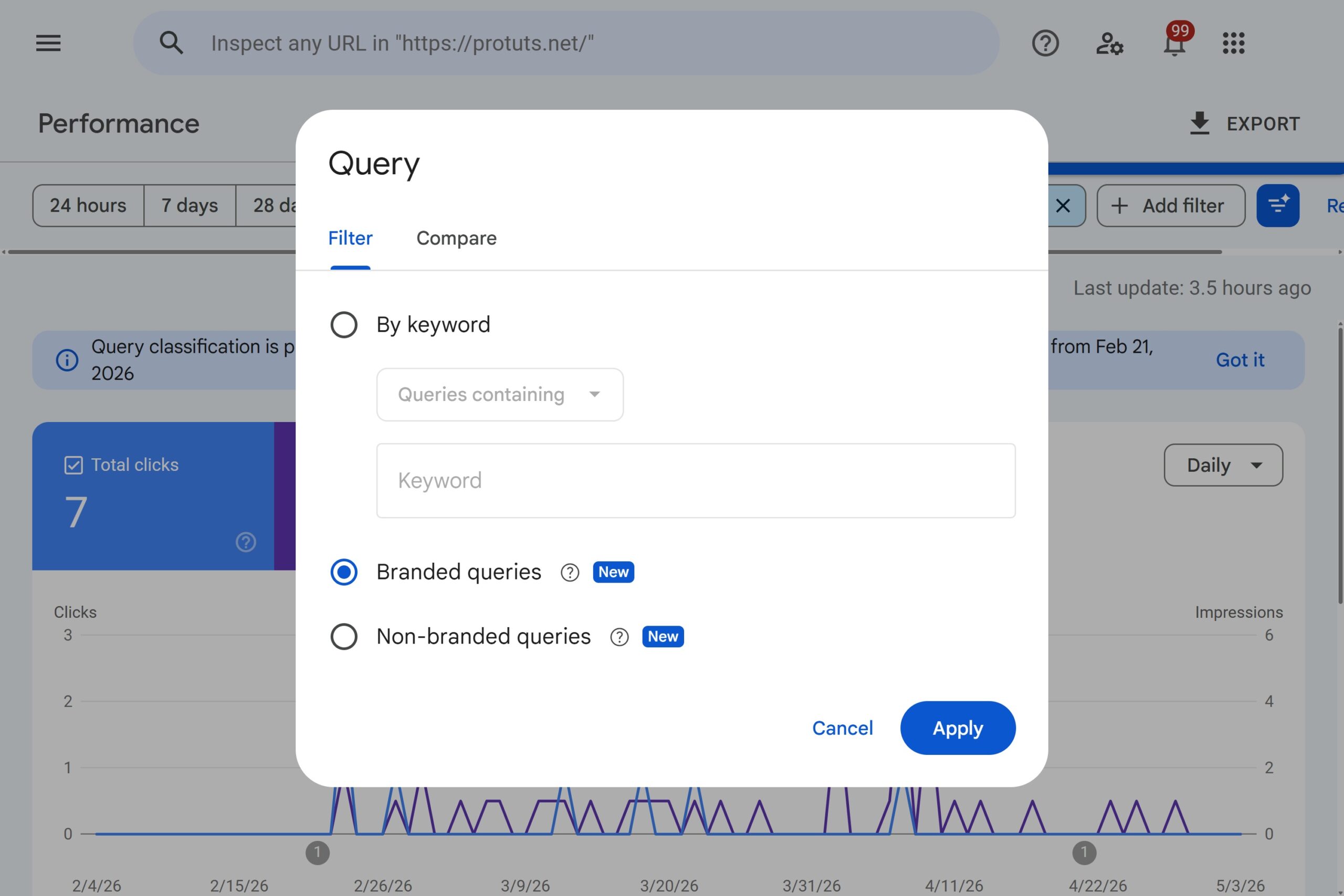
Part of the new features are Query groups that help report on popular search subjects by regrouping similar search terms. His illustration to explain this feature was the many ways one could write “Britney Spears”. The same technology has also helped add a brand filter to Performance reports in Google Search Console. This feature has now rolled out to all users.
Daniel also released a video on LinkedIn reminding users of how to use annotations in Google Search Console. Again, it is a useful feature if you have missed it.
April also saw some bugs in Search Console. First on April 3rd Google reported on a data anomaly concerning Impressions. The problem was fixed on April 3rd but had been ongoing since May 13, 2025. Between these two dates, Impressions data in Google Search Console may have been inflated. If your site was impacted by this reporting error, you will see Impressions decreasing from April 3rd. The Clicks data is not impacted by this bug, but CTR and average position will have been impacted.
Then, on April 12th, Google sent mails to a lot of Google Search Console users saying “Google systems confirm that on April 12, 2026, we started collecting Google Search impressions for your website in Search Console. This means that pages from your website are now appearing in Google search results for some queries.” These mails (usually only sent to new users) were sent out in error and were just a “glitch” according to John Mueller on BlueSky.
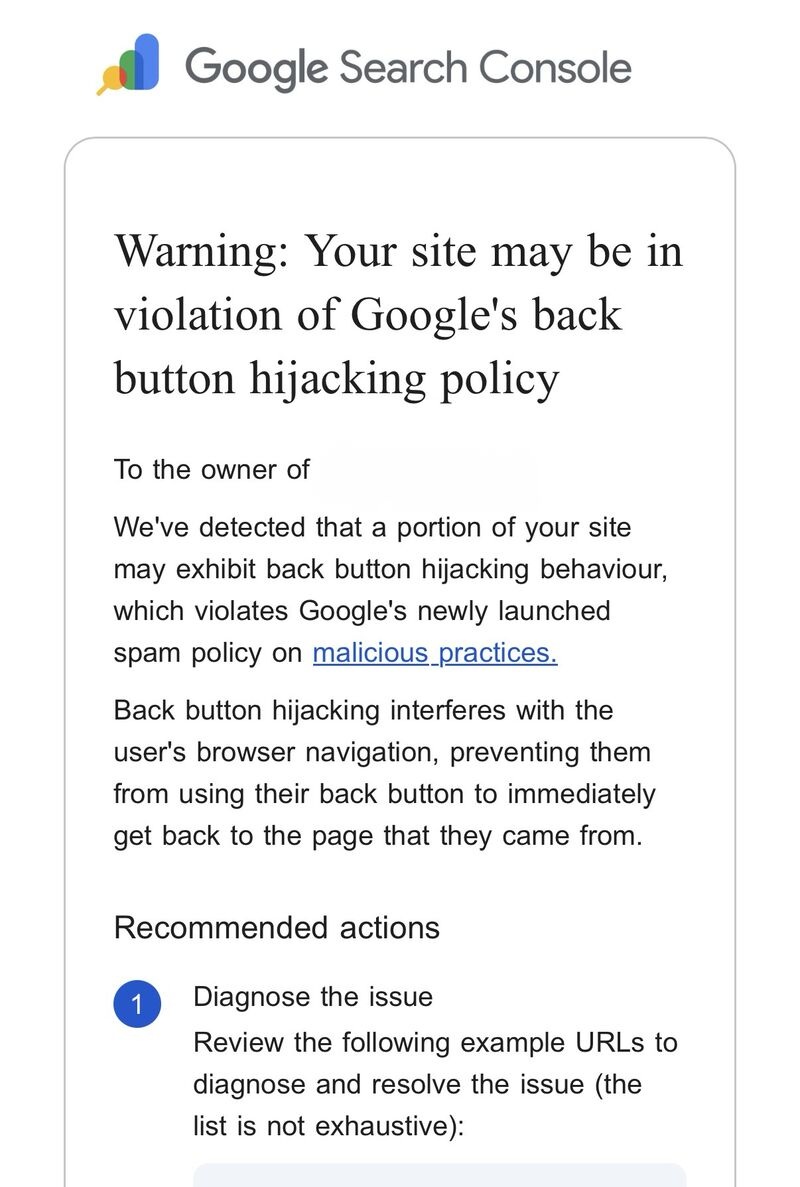
Warnings about Back Button hijacking violations were also sent by Google Search Console to some websites in April. These messages were sent specifically to websites that risk manual actions or automated demotions because of a new spam policy announced by Google on April 13th. Barry Adams shared a copy of an email sent to a website on LinkedIn on April 28th adding the warning that Google will take action on sites that still engage in back button hijacking on June 15th.
DeepSeek 4.0 improves search features
On April 26th the Chinese AI DeepSeek announced the release of DeepSeek V4. This version introduces advanced web search capabilities as standard. This means that the AI can search the web in real time to provide answers or use RAG to check facts before responding to users.
DeepSeek remains a challenger to other LLM like Claude, Gemini or ChatGPT. It was launched in 2023 with the promise that it was less resource hungry than competitors. It is the most popular chatbot in China and is the fourth most popular worldwide. A report by Microsoft suggested DeepSeek had an estimated 89% market share in China, 56% in Belarus, 49% in Cuba and 43% in Russia. It is also very popular in Syria, Iran, and some African countries such as Ethiopia, Zimbabwe, Uganda, and Niger.
The popularity of AI tools is increasing Worldwide. In the US and in Europe, ChatGPT seems to be leading the pack with Google’s Gemini gaining ground. Whereas many expect one tool to dominate as Google now does with search, this may not be the case long-term. It may not be the best or most accurate tool that wins, but the cheapest.
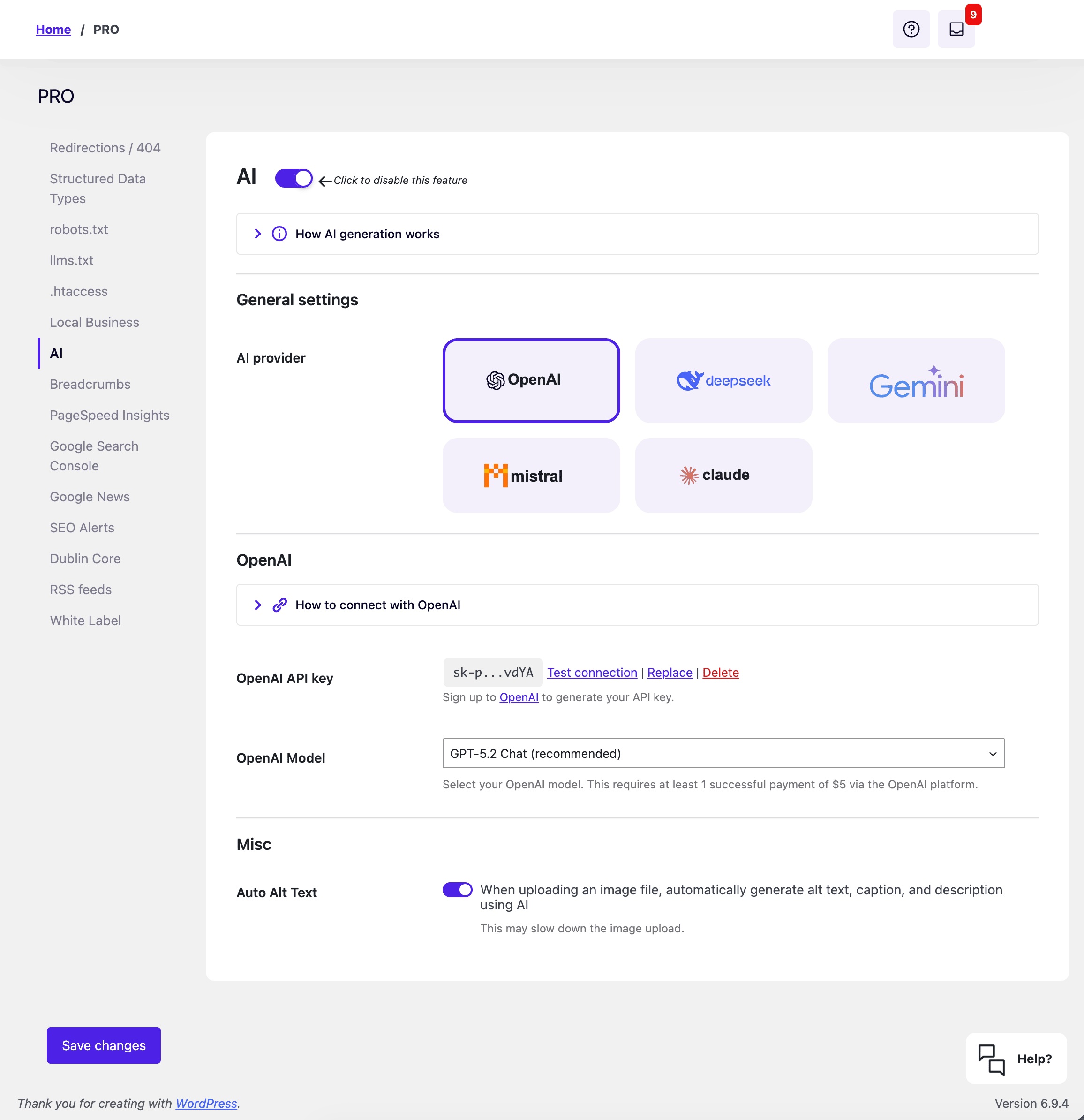
SEOPress integrated AI for generating TITLE, META Description and ALT text over three years ago now. We started with OpenAI but to ensure that we give you the best choice for writing these important elements for your SEO, we have since integrated DeepSeek, Gemini, Mistral and Claude.
Google Search News report April 2026
John Mueller is back once again as anchorman for Google Search News – our favorite output from the Google Search Relations team. In the April 2026 edition John gives us news on Search Console and guidance when “vibe-coding” websites (i.e. generating sites using IA). He is not completely negative about the approach but warns about the risk of creating content that “adds no value to the web”. We recommend you stay with WordPress.
There is also a nice feature with recommended reading by contributors outside of Google that John has appreciated. This month features work by MJ Cachon on eCommerce SEO, Dawn Anderson on debunking and demystifying generative information retrieval, Lily Ray on SEO and AI Search in 2025 and Aimee Jurenka on the role of informational content in the age of LLMs.
Watch the full episode below.


