

There seems to be a resurgence of the Dead Internet Theory – or more simply put, people saying the “web is dead”. It is making enough noise for Google to address it in a podcast (see below), and we’ll quickly share and wholeheartedly agree with their conclusion here: the web is absolutely not dead! Far from it. 2026 may even be the best year for small, authentic websites to get traffic compared to any previous year in the web’s short history.
Like the endless “SEO is dead” claims, people sharing these messages are usually trying to attract your attention with psychological tricks (see FMU or FOMO) and sell you something you don’t really need. Our advice: Ignore them and keep doing good SEO.
Google Discover Core Update
Google announced the February 2026 Discover Core Update on February 5th and it rolled out for English users in the United States over 3 weeks, finishing on February 26th. This is the first time that a Google update has concentrated specifically on Google Discover (which shows up as a personalized article feed in the Google Search mobile app and on the Google.com home page).
News of this update may help increase the interest in Google Discover for small WordPress publishers. For big media sites, it is already recognized as an important source of traffic. Data from Chartbeat for Press Gazette showed that 68% of traffic from Google to global news sites came from Google Discover rather than Google Search and the gap appears to be growing. You can see your own Google Discover traffic in Google Search Console.
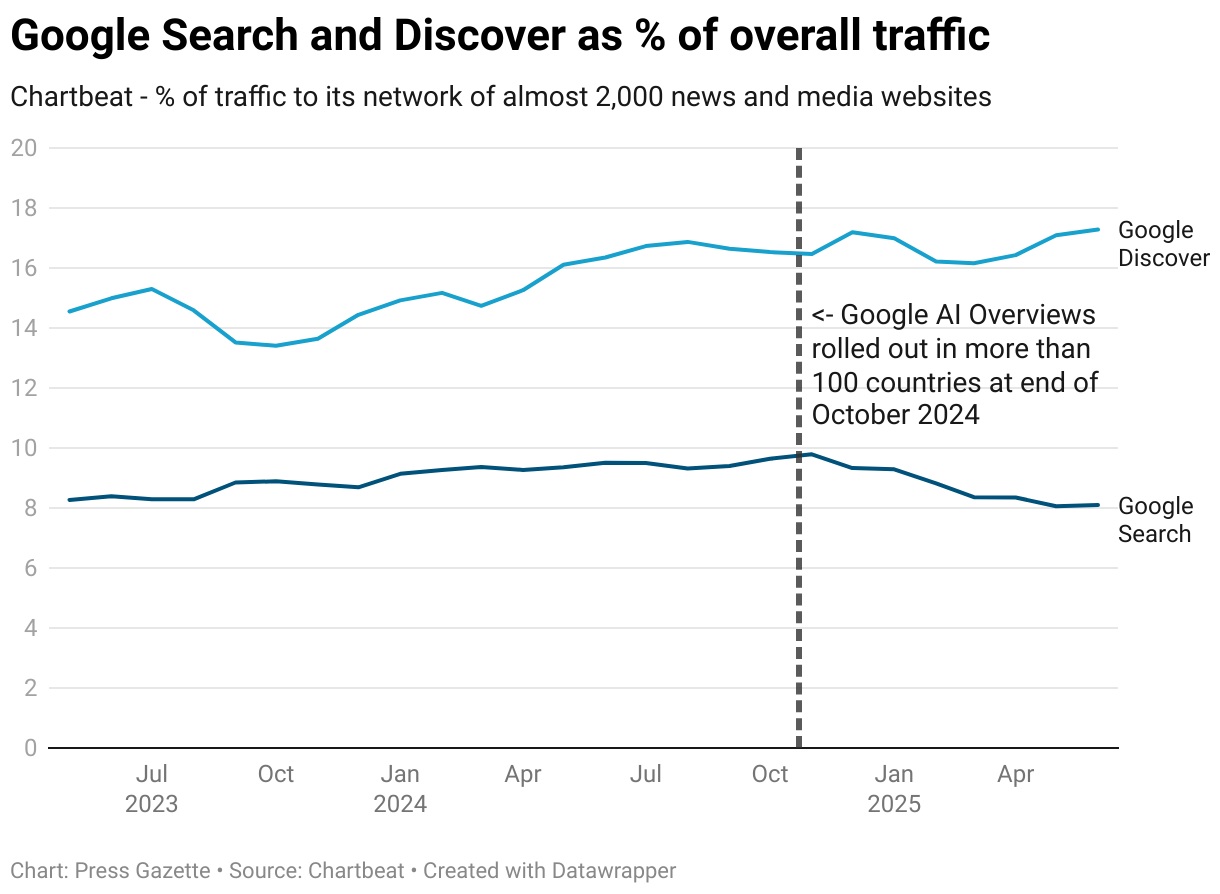
Unlike Google News, Discover is not only open to recognized media. Posts from any WordPress site are also eligible to feature on this prime placement. You should be attentive to Google’s recommendations if you want to feature there. Images are very important.
The February 2026 update is said to help local and niche websites feature more often in Google Discover results and reduce spam (specifically link-bait tactics – yes the ones about the web being dead for example). Results are increasingly personalized; meaning that regular visitors to your website may see now see blog posts from your site in Google Discover
This initial update was specific to Discover for English language users in the US. Google said it will expand to all countries and languages in the months ahead. There are already reports from India and the UK of users seeing changes to Discover results.
Google Search Volatility early February
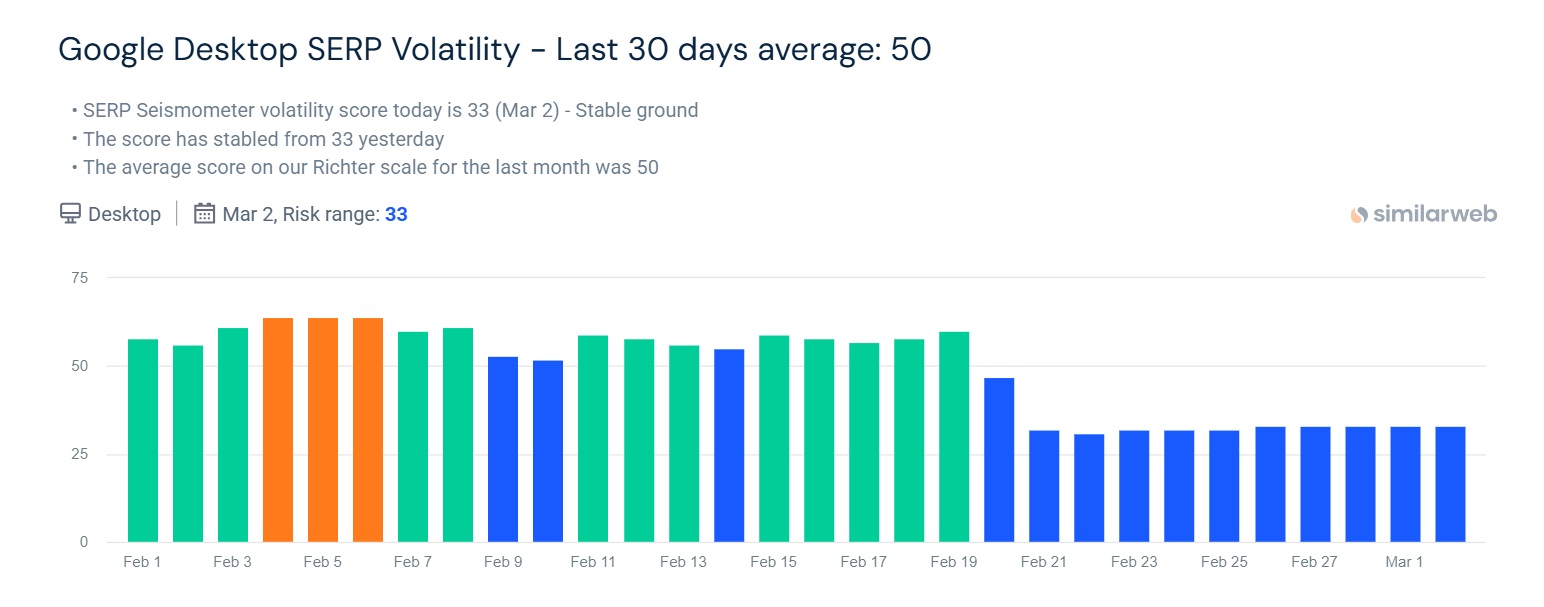
Barry Schwartz reported again on Search Engine Roundtable that volatility in Google Search ranking was heated throughout the month of February, although some tools have shown a decrease in volatility in the last two weeks. This looks like an unconfirmed update which should be unrelated to the Google Discover Core Update mentioned above.
Barry also shared on February 10th that Grokipedia was seeing a decline in Google Search visibility. Research from SEO Glenn Gabe showed that the AI-generated encyclopedia launched by Elon Musk’s company, xAI, had suffered a big decline in traffic, having initially peaked in January. This suggests that AI-generated content cannot rank sustainably in search. Further research from Malte Landwehr showed that the ranking drop had a roll-on effect on visibility in AI Mode and ChatGPT.
Lily Ray saw a crackdown on self-promotional listicles in this latest unconfirmed update from Google. She says that this grey-hat tactic (writing a list of the best companies or products in a particular niche and featuring yourself at the top) has been successful in influencing Google search and AI for over a year.
ChatGPT ads now live
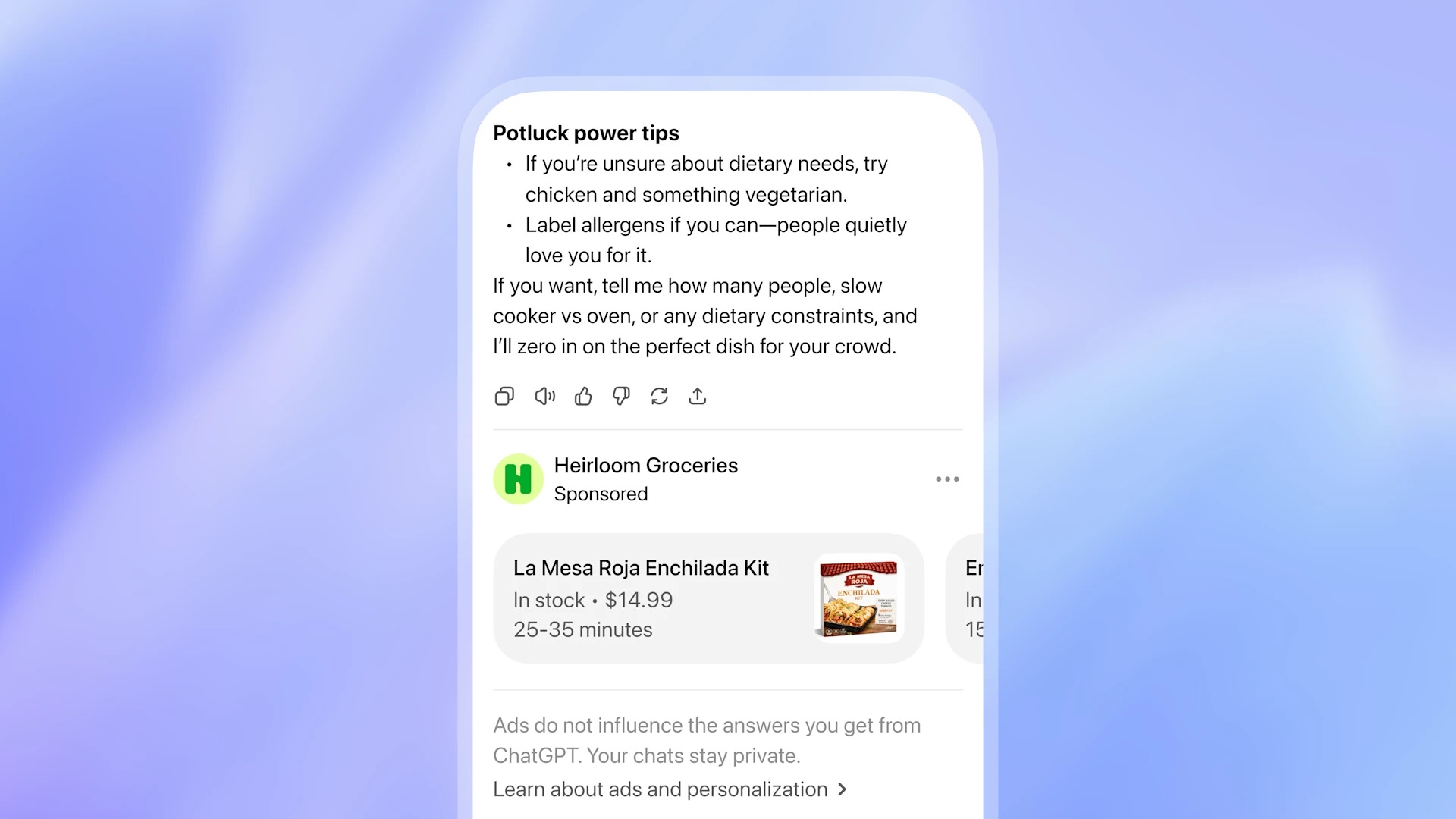
As we predicted in December 2025, OpenAI has started showing ads in ChatGPT. The ads went live on February 9th in the US for free and Go users. Despite speculation that AI generated responses would be influenced by sponsors, there remains a clear line between the AI-generated answer and ads. Ads are clearly labelled “sponsored”.
Users will see ads based on the context of the current conversation, previous chats and past interaction with ads. With the possibility to opt out of the two latter options. Advertisers, on the other hand, will get ad metrics like view and clicks but no specific details on which conversations their ads were shown.
In an interview on YouTube, Asad Awan, one of the ad development leads at OpenAI, gave some background information on the core values behind advertising on ChatGPT and how it will work for advertisers.
Asad said no ads will be shown on sensitive conversations on subjects like health, mental health or politics. He also encouraged small businesses to sign up for advertising, reassuring them that unlike other search engine advertising platforms, advertisers on ChatGPT would not need an agency to run their campaigns. AI will run campaigns for them, based on a brief given through a conversational interface.
The timing of this launch may be terrible. Ads arrive just as there is traction in a movement to quit ChatGPT for political and ethical reasons. Ads may be another reason to leave ChatGPT for alternative AI chatbots like Perplexity, Claude or Gemini.
Is the web dead podcast by Google
On February 12th, Google’s Search Relations team released a new Search Off The Record podcast that focused on the increasing claims that the web was dead. More specifically, Gary Illyes and Martin Splitt asked whether you still need a website in 2026.
They remind us that this is not a new question. In the past people have suggested that mobile apps or social media would mean the death of the web and that proved not to be the case. In fact, to help improve compatibility across different devices, many mobile apps are now web apps.
Spoiling the end for you, they concluded that this recurring industry myth is still not true. They say that recently AI has created the illusion that a website is not needed. In reality AI fundamentally relies on the web to learn and get answers. They insist that, often, AI will lead users to a website. Companies that needed a website to be visible before AI still need one to be visible today. Increased usage of search engines and the help of AI mean that traffic to worthy websites will be better in 2026.
We have noticed that Google’s Search Relations team have been very productive since the start of the year, releasing 5 new podcast episodes (so busy they have lost count of how many they have actually produced and haven’t had the time to update the Search Off The Record homepage on Google Search Central😉).
The full list of episodes released in February were
- February 3rd episode 103 – Crawling Challenges: What the 2025 Year-End Report Tells Us.
- February 13th episode 104 – A discussion on why websites still matter
- February 26th – episode 106 – How Browsers Really Parse HTML (and What That Means for SEO)
- Note: Episode 105 is missing! Your speculation in the comments about what this lost episode could have been about!
Bing Webmaster Tools updates
Bing’s webmaster relations team (with principal product managers Fabrice Canel and Krishna Madhavan) have also been busy in February 2026. The ever attentive Barry Schwartz noted that they had updated their Guidelines in February. They also released the new AI Performance report we talked about last month to all Bing Webmaster Tools users.
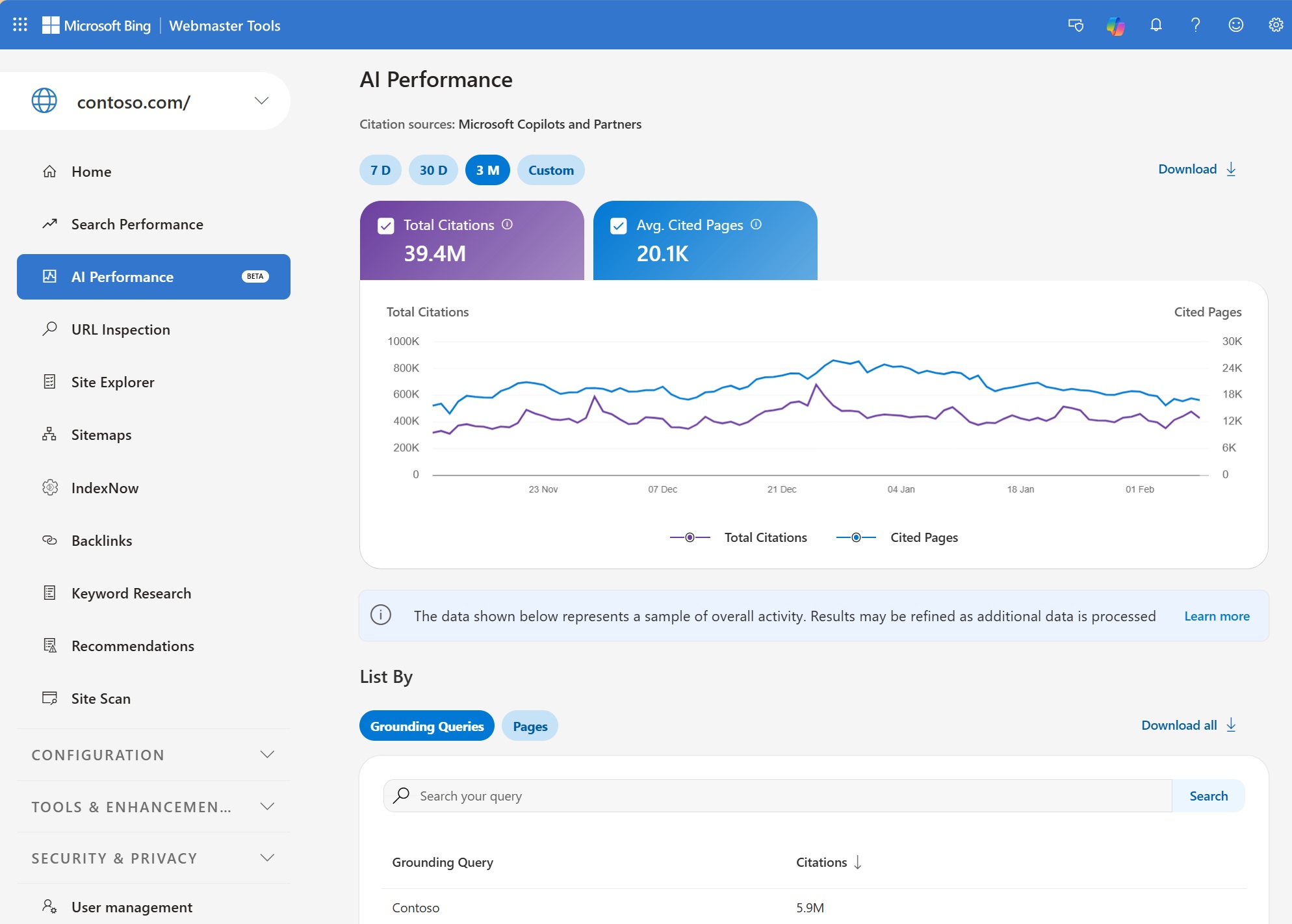
If you don’t have access to Bing Webmaster Tools yet, we suggest you do it now. Check out the AI Performance report for your website. This report shows the number of times your site was cited in AI-generated responses by Copilot and the grounding queries that ranked pages from your site. We have found the numbers quite impressive (for a search engine that is so much less popular than Google) and it is a great new source of keywords to target in your SEO efforts.
Another greatly appreciated initiative from Bing is discovering and shouting out AI Recommendation Poisoning. They have spotted “Summarize this article with AI” buttons on the web that actually perform AI prompt injection, trying to manipulate users’ AI memory. Microsoft say Copilot mitigates these poisoning attacks and the new Bing Webmaster guidelines clearly state that sites using this tactic can be penalized. The full text is “Attempts to add content designed to manipulate or interfere with language models used by Bing or Copilot may result in reduced visibility or removal from search experiences.” It would seem likely that Google search and other AI models will take similar measures against sites that use this new type of AI spam. So make sure you are not using them on your website!


