
In this edition we talk about Google, Bing and ChatGPT. SEOPress helps you rank in all these search engines, and more, because it helps you optimize your site for search and AI agents.
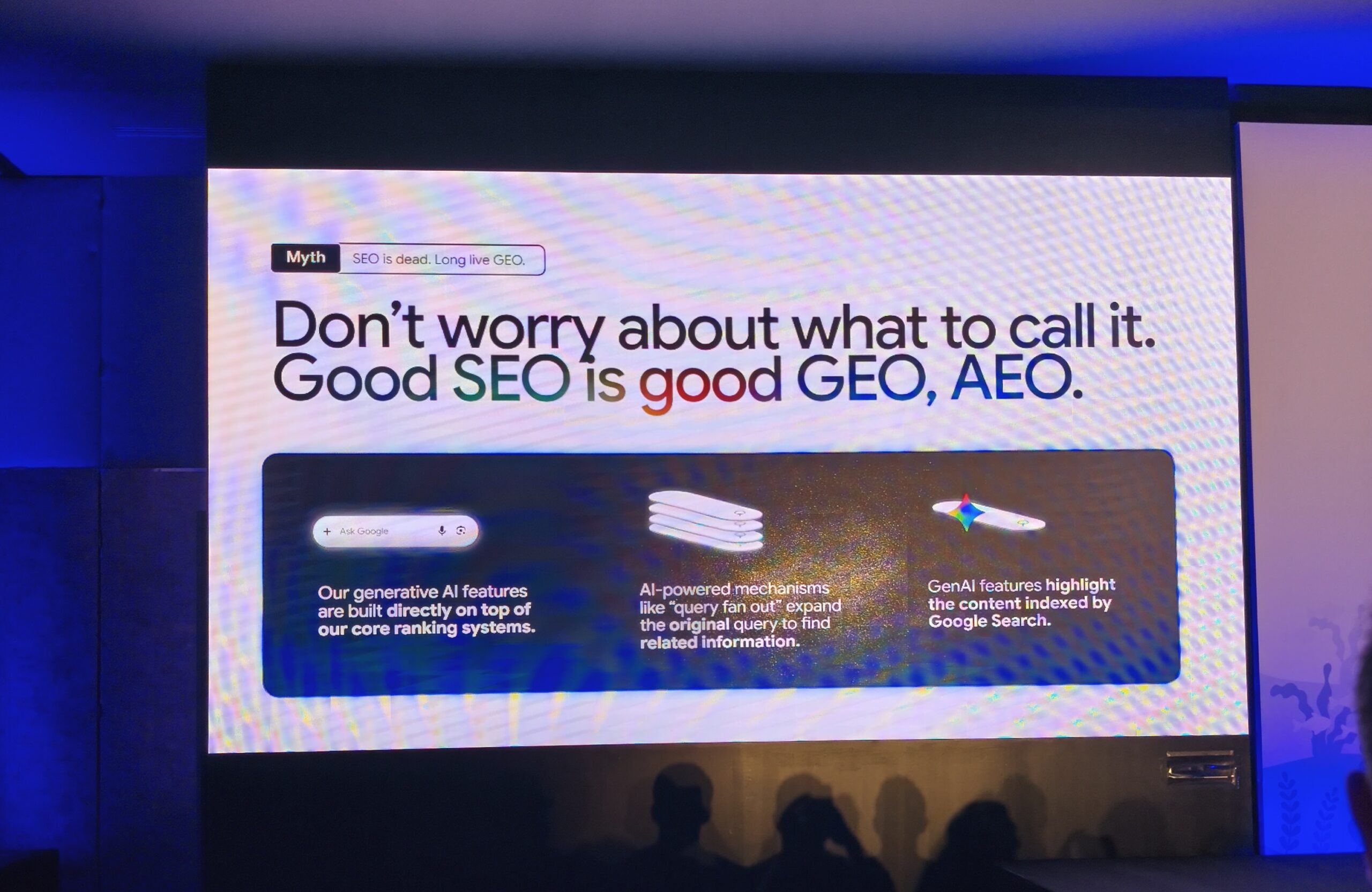
There is an unending debate about whether we should say that SEO is dead and has been replaced by GEO (Generative Engine Optimization) or AEO (Answer Engine Optimization). Google classed this as a “myth” in a presentation at Google Search Central Live Barcelona in September but also said “Don’t worry what to call it. Good SEO is good GEO, AEO”. It is important to note that AI generated features in Google Search are based on Google Search crawling, indexing and ranking systems. Ranking in traditional search results for keyword queries and associated search queries is the first, most important step, to featuring in AI generated results.
An interesting article in Search Engine Land, 7 AI search myths, debunked: What the data says about SEO fights back against other common misconceptions that are currently doing the rounds on LinkedIn:
- AI is killing traditional search
- You can’t grow organic traffic in today’s zero-click environment
- Purely AI-generated content can’t rank
- llms.txt will help your AI visibility
- LLMs have no problems with JavaScript
- AI isn’t driving much traffic to your site
- SEO teams can be replaced by AI
Google September 2026 Spam Update
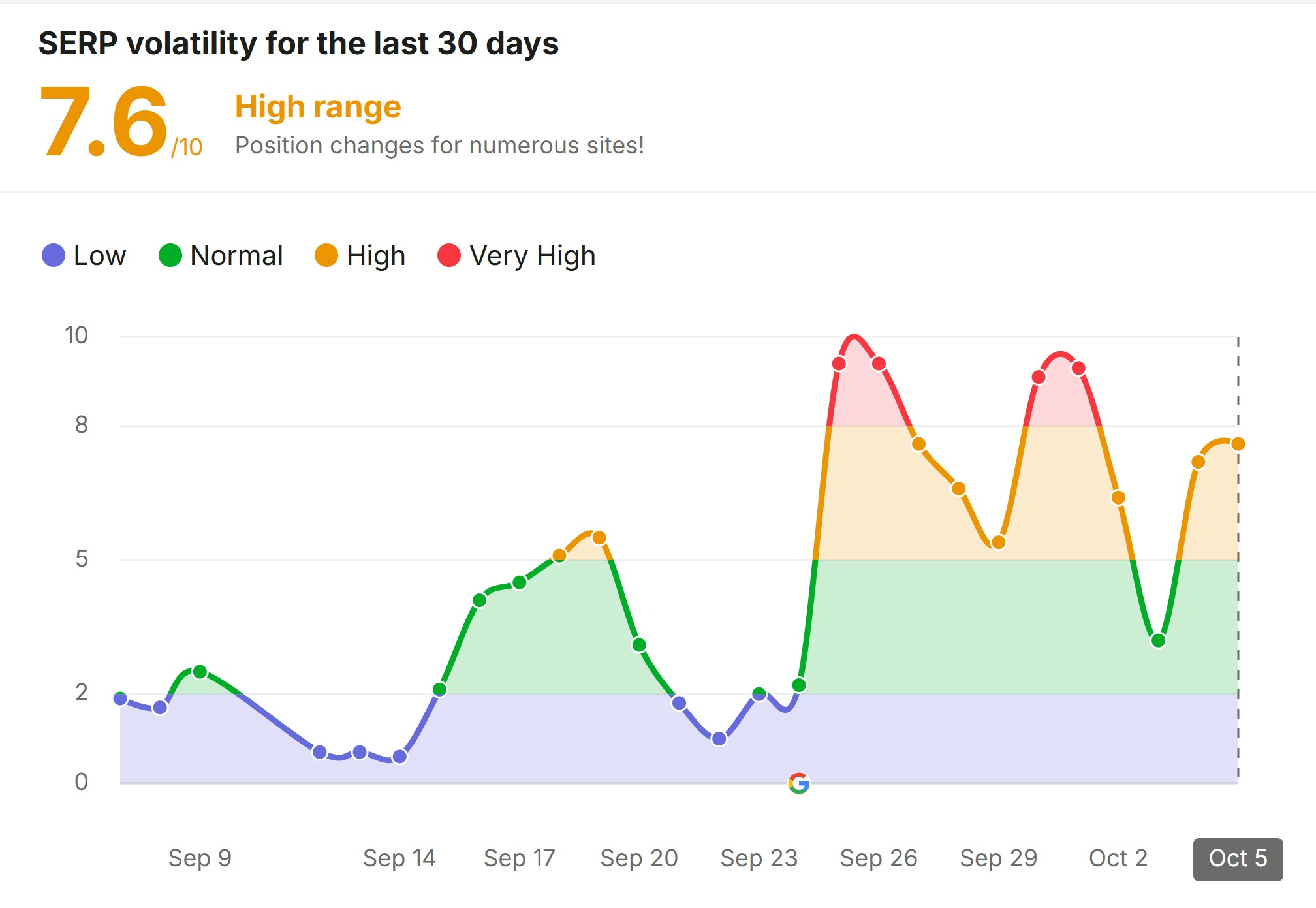
Following shortly after the rapidly deployed August 2026 Spam Update, Google released a new Spam Update on September 24th. This one is expected to take two weeks to roll out and early signs are that it is having a bigger impact on ranking.
The official announcement posted to LinkedIn said simply “Today we released the September 2026 Spam Update to Google Search. This is a normal spam update, and it will roll out for all languages and locations. The rollout may take up to two weeks to complete. More information about spam updates can be found at https://developers.google.com/search/docs/appearance/spam-updates. We’ll update our ranking release history page when the rollout is complete: https://status.search.google.com/incidents/XhUDXP7A67iHCD2kmbVu”.
As we reported last month, a Spam Update can target any number of spam policies. Pages or whole sites violating policies are “punished” by being ranked lower or being removed from ranking altogether. If SEOPress Insights is showing your ranking drop since September 24th, then you may have been affected by the update. However, we recommend letting the update finish rolling out before analyzing results and taking corrective action. Sites may drop and surge back during the update. It also seems that sites hit by previous Spam Updates can recover during a new one.
Shortly after the release of the Spam Update, Google modified the document Google Search’s guidance on using generative AI content on your website which may be a big clue to the policy the update is targeting (Scaled Content Abuse – Using generative AI tools or other similar tools to generate many pages without adding value for users). Writing on Substack, SEO Lily Ray thinks it is more likely that these document changes are for the next big update. The changes Google made say it is critical for publishers to fact-check and review content produced using AI before publishing. This includes titles, meta descriptions, structured data, and image ALT text. There were also changes, noticed by Marie Haynes, to the page Creating helpful, reliable, people-first content, which she thinks that site owners should take notice of.
More AI generated results in Google and Bing
Users are increasingly seeing more AI generated content in search results. Reporting on the Comscore Q2 AI Intelligence report, Danny Goodwin of Search Engine Land says that Google AI Overviews now appear in 39% of US desktop searches. The report also shows that Copilot Search (which may be renamed AI Mode) shows for 17.3% of searches in Bing. It is roughly a 50% increase compared to last year.
These figures published in September refer to data collected in June 2026. In more recent news, two separate LinkedIn posts highlighted research that showed more frequent appearances for AI Overviews in Google Search.
Mark Williams-Cook, creator of the tool AlsoAsked, reported on LinkedIn that research shows that 97% of People Also Asked answers in Google are now generated using AI Overviews. He predicts that this will be 100% soon. Previously, People Also Asked answers in Google showed a snippet and link to a web page. For some sites it was a regular source of visibility and traffic.
Also on LinkedIn, Chris Long gave results of a test he had performed to confirm a feeling that AI Overviews were showing up for a lot of brand searches. His conclusions were that 93 out of 100 enterprise brands had AI Overviews present in search results. This was followed up with research by Ryan Law and Xibeijia Guan of Ahrefs who concluded that AI Overviews currently appear for 83% of branded searches.
These AI-generated introductions could be problematic for brands. Ann Smarty gave an example of a [GoDaddy] search in Google to illustrate how a brand could lose customers before clients arrive on the site.
![Example of a [GoDaddy] search result from Google including a critical AI Overview](https://www.seopress.org/wp-content/uploads/2026/10/ann-smarty.jpg)
ChatGPT is officially a search engine in Europe
After OpenAI declared that ChatGPT had over 45 million average monthly users in Europe, the European Commission has designated it as a Very Large Online Search Engine (VLOSE) under the Digital Services Act (DSA). ChatGPT joins Google and Bing as the search engines that must comply with the strict obligations detailed by the act. These obligations include assessments and mitigation of systemic risks involving illegal content, fundamental rights, minors, elections and public security. Under the same legislation, Google set up an ad transparency center, and it is expected that ChatGPT will do the same.
ChatGPT Ads has seen a surge in advertisers in September after the Ads Manager was launched in India, Europe, the Middle East and North Africa on August 31st and to Southeast Asia and Taiwan on September 23rd. Prior to the launch OpenAI announced that ChatGPT Ads had reached $1 billion in annualized revenue thanks to tens of thousands of advertisers.
An article in State of Brand published on September 26th says that ChatGPT Ads seem to lift organic traffic. It says that marketers are seeing a correlation between running ads and getting traffic from ChatGPT, suggesting that organic traffic drops when ads are turned off. The OpenAI help pages say that “Ads do not influence ChatGPT’s answers” and the article also suggests that marketers may not be tracking ChatGPT Ads traffic correctly in Google Analytics (it gives the solution to the tracking problem at the end of the article).
There have often been suspicions that buying Google Ads helped rank in Google, but these have always been denied by Google and never successfully proven. In our opinion the best way to rank in ChatGPT is to do your basic SEO work of optimizing pages (Good SEO is good GEO) and make sure your site is AI ready with SEOPress. See the following video to see how easy that is to do.